Month/Year
- April 2026
- April 2024
- June 2023
- April 2023
- April 2022
- March 2022
- November 2021
- July 2021
- May 2021
- April 2021
- December 2020
- November 2020
- October 2020
- September 2020
- August 2020
- June 2020
- May 2020
- April 2020
- March 2020
- January 2020
- December 2019
- November 2019
- October 2019
- September 2019
- August 2019
- July 2019
- June 2019
- May 2019
- April 2019
- February 2019
- January 2019
- November 2018
- October 2018
- September 2018
- August 2018
- July 2018
- June 2018
- May 2018
- April 2018
Tag
- A Scowl Becomes Me
- Abuse
- Agent search
- Audio book
- August
- Authenticity
- AutoCrit
- Balance
- Blog
- Blurb
- Book design
- Books
- Books on writing
- Brandon Sanderson
- Character names
- Cover art
- Cultural appropriation
- Depression
- Dialogue
- Editing
- Emotion
- Expenses
- Fans
- Haruki Murakami
- ISBN
- InDesign
- Japan Writers Conference
- Japanese content
- Kintsugi
- Language
- Life in America
- Life in Japan
- Mental health
- Murder
- Muse
- NaNoWriMo
- National Novel Writing Month
- Neyuki
- Orpheus Insufficient
- Orson Scott Card
- Pandemic
- Pantsing
- ProWritingAid
- Publishing
- Punctuation
- Routine
- Scrivener
- Self-publishing
- Sequel
- Sexual abuse
(Im)patience
Waiting—and editing—but still, waiting.
I am still editing Under Shōko’s Bed. The marks this time through are much fewer, though. Of course, I must eventually stop—and I want to; I have other projects. But I want this novel to be as good as I have in me. So four other people are reading it now. I gave out red pens along with the novel. I will have their feedback in a few weeks. I don’t know whether to hope for a lot of red ink.
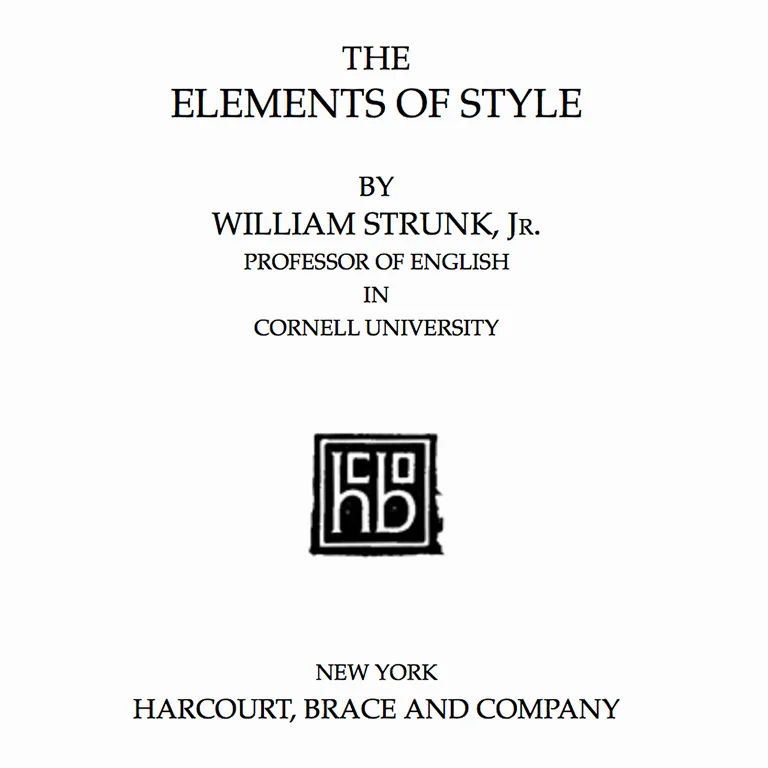
In the meantime, I will finish my own edit, then read it through yet again, but more quickly, trying to judge the flow of the story and whether it drags. If I’m still waiting at that point, I will work through the text slowly—hopefully for the final time—looking for more of the problems William Strunk proscribes in The Elements of Style. One by one I am getting them into my head (appropriately updated for changes in American English in the last hundred years.) I wish I had a punctuation expert. I know the basic rules. I am into gray areas now that punctuation pundits on the Internet never mention. My wife tells me that in those situations I can simply decide, so I do. And I am careful to keep the punctuation all internally consistent. Still, I’d be more comfortable if there were rules.
As others read, I have to keep working. I don’t have the patience to simply wait. When I cut through all of this impatience, though, I am staring at the same difficult decision I have been facing all along: whether to self-publish. I had decided to do that, but my editor told me the story is good enough for a publishing house. Now I’m all up in the air again. If I self-publish, it’s time to be finding a book cover designer. If I go with a publishing house, I imagine they will handle that. But how long could it take to find a publisher?
More than anything, I hate the indecision. I am impatient to know what will happen. But it’s a journey, and I choose the path. So I will contact my editor again and get some advice on publishers. But when I do that, I would like to send an updated manuscript, and that means waiting for my readers to give me feedback.
Waiting—and editing—but still, waiting.
Books on writing: William Strunk Jr.
William Strunk Jr.’s The Elements of Style, a classic reference for writers, brims with useful advice, but at 100 years old, is any of it archaic?
I did something dumb. I sent Under Shōko’s Bed off for editing without going through it to see how well it matched all of the prescriptions and proscriptions in William Strunk Jr.’s The Elements of Style. I’ve read it before. Short as it is (only 50 pages), it doesn’t take long, and I thought I had learned its lessons. I decided to reread it for this blog and only then found that I did not have a copy. I got one posthaste (it’s free on the Internet) and oh, the problems I discovered! I had not learned its lessons at all!
Here are two examples from Strunk’s section on “Words and Expressions Commonly Misused” that I seem to have been using incorrectly forever:
All right. Idiomatic in familiar speech as a detached phrase in the sense, ‘Agreed,’ or ‘Go ahead.’ In other uses better avoided. Always written as two words.
Compare. To compare to is to point out or imply resemblances, between objects regarded as essentially of different order; to compare with is mainly to point out differences, between objects regarded as essentially of the same order. Thus life has been compared to a pilgrimage, to a drama, to a battle; Congress may be compared with the British Parliament. Paris has been compared to ancient Athens; it may be compared with modern London.
At the same time, I recognize that Strunk’s work is now 100 years old. English usage has changed in that time. For example, Strunk states that “would” is commonly misused:
Would. A conditional statement in the first person requires should, not would. I should not have succeeded without his help. The equivalent of shall in indirect quotation after a verb in the past tense is should, not would. He predicted that before long we should have a great surprise.
This is based on the old usage for showing futurity of “shall/should” for first-person pronouns and “will/would” for second- and third-person pronouns. The problem is that Americans don’t speak that way today. “Should” in common usage has lost its simple futurity meaning and its meaning of obligation now predominates, which changes the meaning of Strunk’s example, “I should not have succeeded without his help.” Strunk meant, “I succeeded because I had his help,” while today the sentence means, “I ought to have failed without his help.” The two meanings are related but they are not the same, and I worry that using the classical rule could lead to misunderstanding for today’s readers.
All of this leaves me hoping that my editor can channel Strunk, whose text still shines in both clarity and brevity, but waiting with great curiosity to see if some of the more archaic rules have been relaxed and my “mistakes” have made it through the editing process unscathed. In the end, of course, it is up to me to decide how closely to follow Strunk. My plan is to do what I should have done before the edit, go through Strunk page by page and search my text for each of the problems he explains. In the process, I hope I shall internalize his relevant advice, and I hope that I can lean on my editor for help in deciding which bits of advice are no longer relevant.