Month/Year
- April 2026
- April 2024
- June 2023
- April 2023
- April 2022
- March 2022
- November 2021
- July 2021
- May 2021
- April 2021
- December 2020
- November 2020
- October 2020
- September 2020
- August 2020
- June 2020
- May 2020
- April 2020
- March 2020
- January 2020
- December 2019
- November 2019
- October 2019
- September 2019
- August 2019
- July 2019
- June 2019
- May 2019
- April 2019
- February 2019
- January 2019
- November 2018
- October 2018
- September 2018
- August 2018
- July 2018
- June 2018
- May 2018
- April 2018
Tag
- A Scowl Becomes Me
- Abuse
- Agent search
- Audio book
- August
- Authenticity
- AutoCrit
- Balance
- Blog
- Blurb
- Book design
- Books
- Books on writing
- Brandon Sanderson
- Character names
- Cover art
- Cultural appropriation
- Depression
- Dialogue
- Editing
- Emotion
- Expenses
- Fans
- Haruki Murakami
- ISBN
- InDesign
- Japan Writers Conference
- Japanese content
- Kintsugi
- Language
- Life in America
- Life in Japan
- Mental health
- Murder
- Muse
- NaNoWriMo
- National Novel Writing Month
- Neyuki
- Orpheus Insufficient
- Orson Scott Card
- Pandemic
- Pantsing
- ProWritingAid
- Publishing
- Punctuation
- Routine
- Scrivener
- Self-publishing
- Sequel
- Sexual abuse
UCLA course with Steven Wolfson
I presented ideas for three novels in the class, and my classmates voted overwhelmingly for a novel titled August. For class, I worked on fleshing out some key scenes. I am excited to complete the novel. It the story of an eighty-two-year-old man named August Norman who finds out he has ALS. He takes a last desperate shot at making something out of the little bit of life he has left. He breaks out of his nursing home, steals his daughter’s car, and embarks on a cross-country quest to find and win back his college sweetheart, May White. But love in their eighties is no simple affair, as they fight concerted family opposition.
I am now working on August pretty much full time. I love this part of writing, where the details of the story reveal themselves. It’s exciting every day.
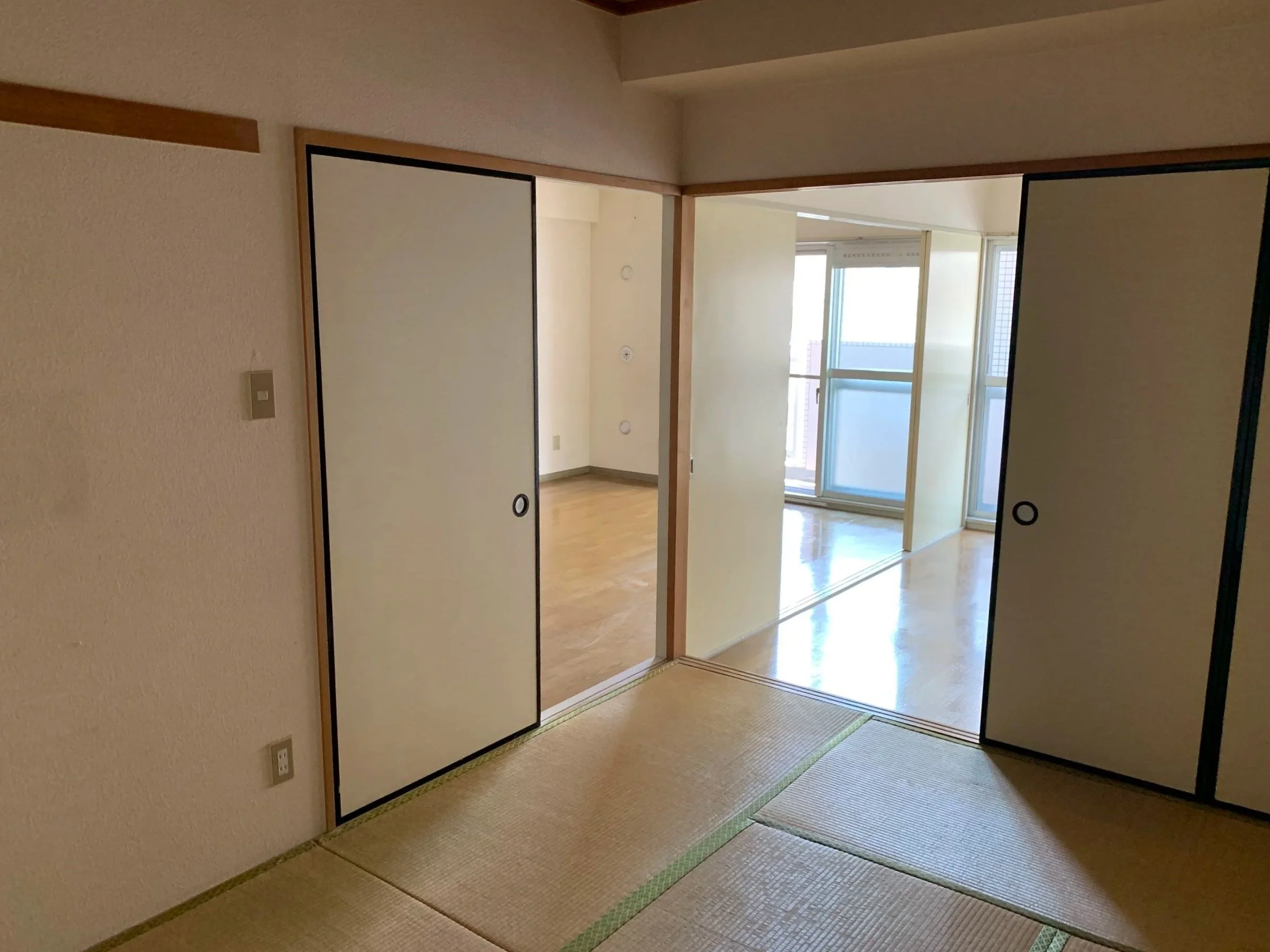
I continue to prepare for my rapidly approaching move from Japan to America. (Thus, the picture for this post is my empty apartment instead of a picture of Steven.) But I have also just completed a totally energizing six-week writing course offered through UCLA Extension called “Conquering Your Story and its Superstructure.” The teacher was Steven Wolfson, a playwright and screen writer. Two years in close succession (2020 and 2022) at the Japan Writer’s Conference, I found his presentations far and away the most interesting and useful of all those I attended. So I contacted him and found out he regularly teaches courses at UCLA.
Here is Steven’s description of the course I took:
“The first fundamental challenge facing all writers, whether novice or professional, is the process of transforming your premise into a compelling, sustainable story. This intensive workshop focuses solely on the art of the story, with an emphasis on such fundamentals as character development, super-objective, rising conflict, scene work, and the all-important quest to find your story’s superstructure. Through a series of lectures, published examples, and in-class writing exercises, writers learn how to spot critical mistakes often made in the initial development of any narrative. This workshop is designed for writers with a specific story they feel passionate about telling. After the course, you have a greater understanding of what makes a story work, along with your own detailed superstructure outline to use in the development, completion, and revision of your story.” This is a great course for anyone who is looking for more structure in their writing—which, I expect, is most writers.
I presented ideas for three novels in the class, and my classmates voted overwhelmingly for a novel titled August. For class, I worked on fleshing out some key scenes. I am excited to complete the novel. It the story of an eighty-two-year-old man named August Norman who finds out he has ALS. He takes a last desperate shot at making something out of the little bit of life he has left. He breaks out of his nursing home, steals his daughter’s car, and embarks on a cross-country quest to find and win back his college sweetheart, May White. But love in their eighties is no simple affair, as they fight concerted family opposition.
I am now working on August pretty much full time. I love this part of writing, where the details of the story reveal themselves. It’s exciting every day.
Website: 5th anniversary
I’ve been distracted by my retirement and the preparations for moving to the US at the end of June, but my days are full of writing. I will have so much to show when publication time finally rolls around.
My blog has fallen by the wayside, but not me. I’ve been distracted by my retirement and the preparations for moving to the US at the end of June, but my days are full of writing. I will have so much to show when publication time finally rolls around.
It’s interesting that writing will no longer be a safe haven from work stresses, because yesterday, I retired from teaching. So if there is any stress now, it will be the writing itself. The bigger change, though, will be sitting and writing in America instead of Japan. I don’t know if I will continue to write books set in Japan. The next two I have on my plate will be set in the US. I expect there will also be a major change in quietude, going from a home with two sixty-five year olds to one with a pair of young kids. I am sure, though, that writing will continue. I enjoy it too much to drop it or even cut back much.
One activity that I enjoyed again this year was writing for National Novel Writing Month last November. I wrote 106,800 words, qualifying me for another yet NaNoWriMo win, but I didn’t finish the novel, the sixth novel in The Time Well series. It has since continued to grow. I fear I have a monster on my hands.
Capturing life in Japan: Language
In capturing life in Japan in writing, language is a challenge: 1) how to handle the imperfect language of nonnative speakers, 2) how much Japanese to include, and 3) how to provide translation of the Japanese.
Life in Japan is as exotic as one may imagine, and every bit as routine as life anywhere. Which end of the scale one experiences depends very much on what she or he chooses to make of each day. For me, it is also rooted in how often I am willing to just stop, look, breathe, and allow awe to wash over me.
Giving a novel a sense of life in Japan presents a host of problems. Include too much about Japan’s uniqueness and it becomes all travelog; the story gets lost. Focus only on the storyline and the richness of the setting is lost.
One challenge I have faced trying to capture life in Japan in writing is what to do about language, particularly: 1) how to handle the imperfect language of nonnative speakers, 2) how much Japanese to include, and 3) how to provide translation of the Japanese. I think I have good answers, but not all of my readers agree. I am still awaiting a professional edit of my first novel, Under Shōko’s Bed, so my solutions may change as I work with my editor. Nevertheless, let me propose answers to my three “hows.”
How to handle nonnative speech
When dealing with non-native speakers’ English, particularly Japanese, my approach is to make it authentic. Thus, Shōko in Under Shōko’s Bed makes common grammatical errors and uses a limited English vocabulary. Some have commented that her style of speech makes her seem stupid, but I disagree. Perhaps because I have lived in Japan for so long and am so used to very imperfect English spoken by people I know to be incredibly bright, English imperfections don’t feed my prejudices. Besides, some of the greatest authors of our time (e.g., William Faulkner) have used dialects to great effect. My view of nonnative Japanese speakers such as myself is the same. It is a difficult language. Almost all of us have some trouble, so when writing the English equivalents of their Japanese conversations, I make the English imperfect. Imperfection is part of being human. Not merely accepting but appreciating the imperfection in others is a very worthy trait. I think it’s a fine thing for a novel to reflect that.
How much Japanese to include
I feel like a reader gets a richer experience, more of a country’s flavor, when its language enters the text. Some words, of course, simply have no English equivalent. For example, a genkan is not just an entryway. It is where a person removes his or her shoes before stepping up into the house. Thus, it is a hybrid space that is treated in some ways as being both inside and outside. For example, one does not step out of one’s shoes onto the genkan floor, as the floor of the genkan is “outside” in terms of cleanliness. Instead, the step is made directly up into the house. It can lead to some gymnastics for foreigners who are unused to it, but most master it well enough. (I generally feel childishly unable to make the movement smooth and effortless.) The inclusion of the word, though, highlights in a small way that Japanese homes are different and reminds the reader that this is a unique culture.
Other words I include are relatively simple ones that can be understood in context, and they often come in through dialogue. The one way that longer Japanese text may enter is in scenes written from the point of view of a foreigner who does not understand what is being said. If the Japanese is more than a couple of lines, I simply say that the person does not understand, but I think short dialogue with no immediate translation can be an effective way of putting the reader into the place of the character.
How to provide the reader with translation
My third issue, how to handle translation, depends on the words and where they appear. At the outset, let me state that I think the reader deserves a translation of non-English words and phrases in an English novel. I know I feel just a little cheated reading translations of Gabriel García Márquez as I cannot understand untranslated Spanish words or phrases—not cheated enough to go searching for meanings on the Internet, though. I just read on, likely missing some of the color of the novel. In Under Shōko’s Bed, I chose to deal with the translation problem in three ways. First, the basic meaning (obviously not all nuances) of some words, such as “genkan” explained above, can be understood well enough from the context, so I include no translation within the text.
Second, for words that appear more than once in the novel, and have simple English equivalents and that are not easily understood from the context, I put the English in parentheses after the Japanese the first time the word appears. For example, “She walked past a kōban (police box) on the way to work.” This is simple, direct, and if not done too frequently, does not significantly intrude on the reading experience. The one place I try not to do this is in dialogue, as it breaks the flow and rhythm of speech.
The third way that Japanese appears, as explained above, is in short bits of conversation as heard and not understood by nonnative speakers.
Regardless of how a word is dealt with in the text, however, I include all Japanese words and phrases that appear in the text in a glossary at the end of the book. Anyone interested in a word’s meaning can simply turn to the end and see.
I did not immediately come to the “appendix” solution. In my first drafts, I put the translations in footnotes. I am a slow and ponderous reader whose mind constantly wanders. (Reading anything but the most engrossing fiction can be truly painful.) So checking footnotes does not bother me at all. Some readers, though, told me that the footnotes interrupted the flow of their reading. The obvious solution was to put all the translation into a glossary. This also serves as an excellent overall indicator of the amount of Japanese in the novel. If the glossary is too thick, I am overloading the text with Japanese, to the detriment of the reader. If it is too thin, the experience won’t be authentically Japanese. Of course, what is too thick or thin is completely subjective. Under Shōko’s Bed had too much Japanese in the early drafts, so I cut some. The novel I am writing now is woefully short of Japanese. As I rework it, I will add more.
I hope my solutions to the problem of language work for most readers. I know they do for me and for others who have read my drafts. I would love to hear others’ solutions, though, so please comment!