Month/Year
- April 2026
- April 2024
- June 2023
- April 2023
- April 2022
- March 2022
- November 2021
- July 2021
- May 2021
- April 2021
- December 2020
- November 2020
- October 2020
- September 2020
- August 2020
- June 2020
- May 2020
- April 2020
- March 2020
- January 2020
- December 2019
- November 2019
- October 2019
- September 2019
- August 2019
- July 2019
- June 2019
- May 2019
- April 2019
- February 2019
- January 2019
- November 2018
- October 2018
- September 2018
- August 2018
- July 2018
- June 2018
- May 2018
- April 2018
Tag
- A Scowl Becomes Me
- Abuse
- Agent search
- Audio book
- August
- Authenticity
- AutoCrit
- Balance
- Blog
- Blurb
- Book design
- Books
- Books on writing
- Brandon Sanderson
- Character names
- Cover art
- Cultural appropriation
- Depression
- Dialogue
- Editing
- Emotion
- Expenses
- Fans
- Haruki Murakami
- ISBN
- InDesign
- Japan Writers Conference
- Japanese content
- Kintsugi
- Language
- Life in America
- Life in Japan
- Mental health
- Murder
- Muse
- NaNoWriMo
- National Novel Writing Month
- Neyuki
- Orpheus Insufficient
- Orson Scott Card
- Pandemic
- Pantsing
- ProWritingAid
- Publishing
- Punctuation
- Routine
- Scrivener
- Self-publishing
- Sequel
- Sexual abuse
The Chicago Manual of Style
Too often websites either disagreed or offered no helpful guidelines and I was having to decide on my own what grammar and punctuation rules to use. In addition, the sites didn’t cover many of the fine points, forcing me to make up too much. I needed a comprehensive style guide. So I adopted The Chicago Manual of Style.
I prefer having rules. It’s how things ought to be. There should be a right way to punctuate faltering or interrupted dialogue, to choose between toward or towards, or to know whether to make that last comma italic or Roman. (The answer is Roman.) So I made a major commitment a few weeks ago. I stopped looking up grammar, punctuation, and usage questions at what I hoped were trustworthy online sources. Too often those websites either disagreed or offered no helpful guidelines and I was having to decide on my own what rule to use. In addition, the sites didn’t cover many of the fine points, forcing me to make up too much. I needed a comprehensive style guide. So I adopted The Chicago Manual of Style.
I wish I had a good reason for waiting so long (especially since I am a University of Chicago alumnus). The CMOS is one of American English’s most accepted writing style standards. I suppose I thought it was mostly for dissertations and other academic papers. I was wrong.
It’s a major undertaking to look up all over again the myriad things I’ve wondered about. Plus, I just need to sit and read some sections of the book (perhaps at bedtime?). It will take a long time, but once I learn the Chicago rules of style, I won’t have to look up those answers so much anymore. The most difficult thing for me is punctuation, especially in italics or dialogue. Under Shōko’s Bed has far more italicized text than any of my other novels, so it has been hard to edit. Once I have mastered Chicago style, though, novels I write from then on will not need so many style interventions.
I just wish every topic in the CMOS had a single answer, even if it was context dependent. But some seem to have multiple acceptable styles or even conflicting advice in different sections. (I’m still not sure which numbers to spell out in dialogue, for example.) So some choices remain. Writing is all about choices, after all. In the pursuit of art, any rule is breakable as long as the breaking is purposeful. I’m the one at the computer, so the ultimate decisions are all mine. For stylistic choices, though, I wanted some help. With the CMOS next to me, I have somewhere authoritative to turn.
One space or two?
I’m changing because I don’t want to be thought of as an old guy, despite my being, in fact, an old guy.
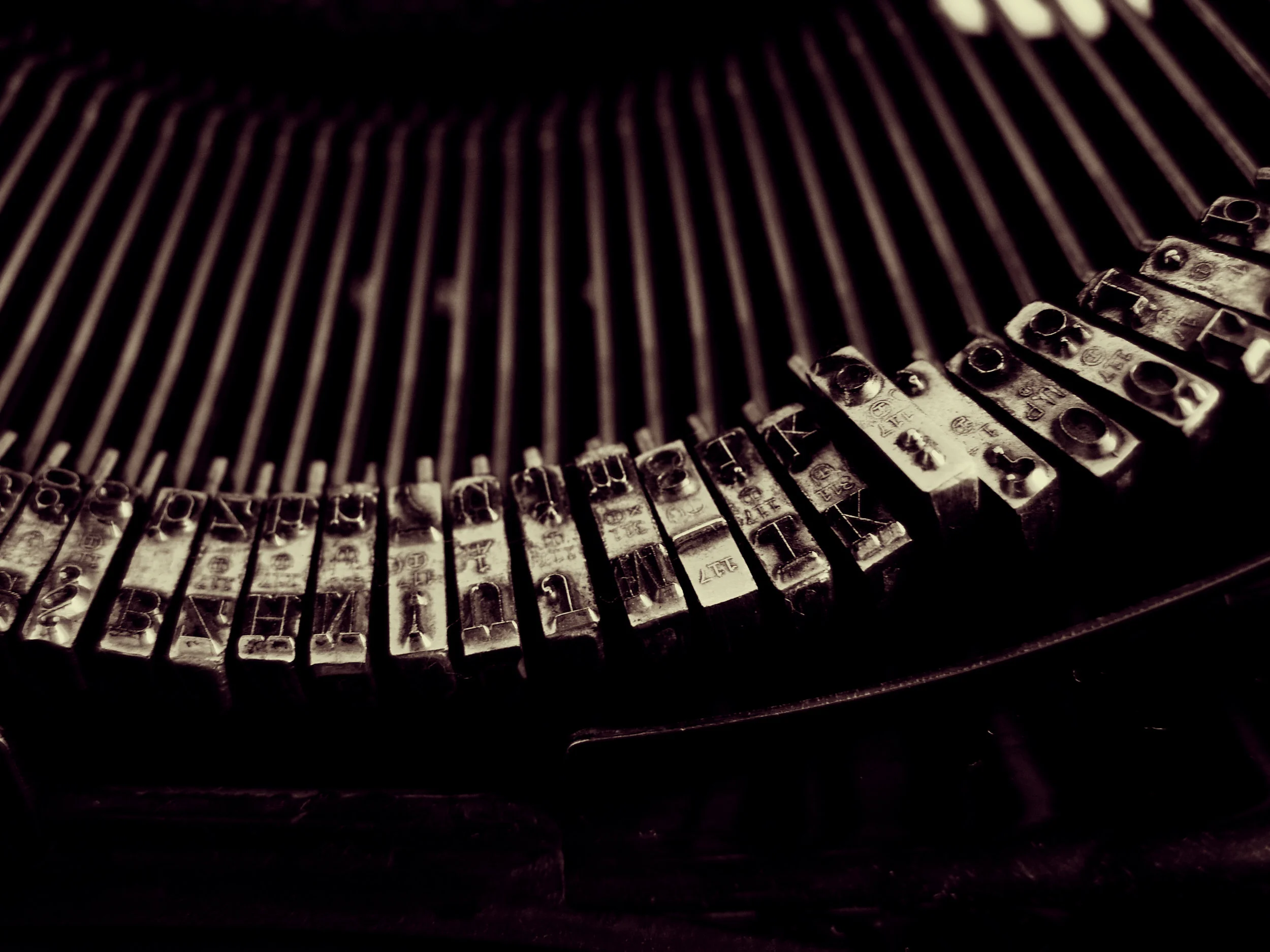
Which is correct, one space or two after a period? I have fought the move towards one space that started decades ago, I was so firmly ensconced in my double-space habit. So why the change after so long? I think it comes down to simple vanity. I still prefer the look of double spaces. They look less crowded. But I read that double spacing after periods is a sign of age, a sign that you grew up in the typewriter era. (I actually took a typing class in high school, although it didn’t really take, with the exception of double spaces after periods.) In fact, I have read that college admissions officers commonly reject essays with double spaces because it is such a strong indicator that the applicant’s parents wrote the essay.
So I’m changing because I don’t want to be thought of as an old guy, despite my being, in fact, an old guy. I am hoping that with this change I will be able to slip my stories more stealthily into the book bags and Kindles of readers of all ages. So what if the text looks cramped? I can get used to it.
If I could just keep my thumb from doing that automatic double tap….