Writing courses M. Harmon Wilkinson Writing courses M. Harmon Wilkinson

UCLA course with Steven Wolfson

I presented ideas for three novels in the class, and my classmates voted overwhelmingly for a novel titled August. For class, I worked on fleshing out some key scenes. I am excited to complete the novel. It the story of an eighty-two-year-old man named August Norman who finds out he has ALS. He takes a last desperate shot at making something out of the little bit of life he has left. He breaks out of his nursing home, steals his daughter’s car, and embarks on a cross-country quest to find and win back his college sweetheart, May White. But love in their eighties is no simple affair, as they fight concerted family opposition.

I am now working on August pretty much full time. I love this part of writing, where the details of the story reveal themselves. It’s exciting every day.

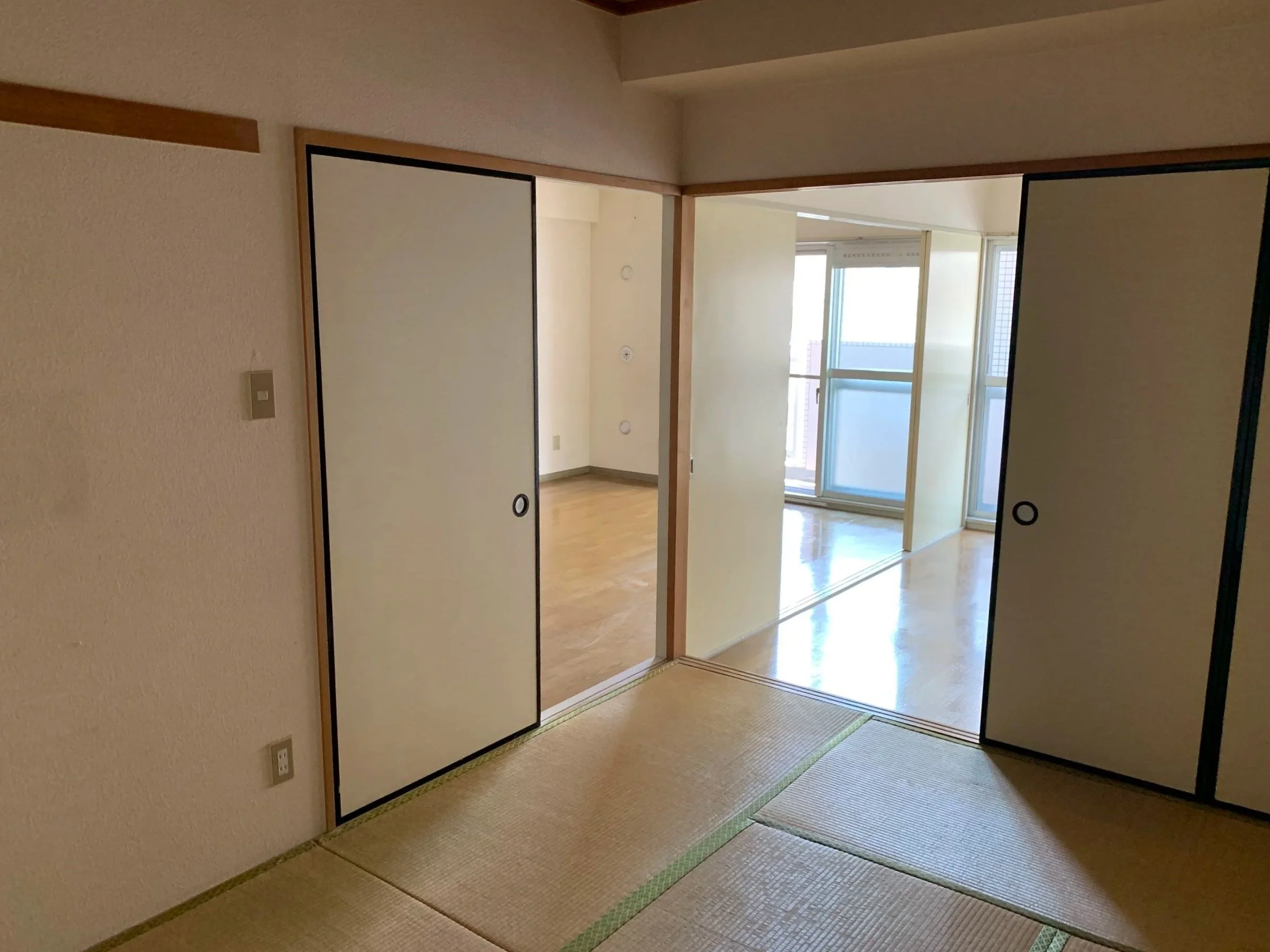
I continue to prepare for my rapidly approaching move from Japan to America. (Thus, the picture for this post is my empty apartment instead of a picture of Steven.) But I have also just completed a totally energizing six-week writing course offered through UCLA Extension called “Conquering Your Story and its Superstructure.” The teacher was Steven Wolfson, a playwright and screen writer. Two years in close succession (2020 and 2022) at the Japan Writer’s Conference, I found his presentations far and away the most interesting and useful of all those I attended. So I contacted him and found out he regularly teaches courses at UCLA.

Here is Steven’s description of the course I took:

“The first fundamental challenge facing all writers, whether novice or professional, is the process of transforming your premise into a compelling, sustainable story. This intensive workshop focuses solely on the art of the story, with an emphasis on such fundamentals as character development, super-objective, rising conflict, scene work, and the all-important quest to find your story’s superstructure. Through a series of lectures, published examples, and in-class writing exercises, writers learn how to spot critical mistakes often made in the initial development of any narrative. This workshop is designed for writers with a specific story they feel passionate about telling. After the course, you have a greater understanding of what makes a story work, along with your own detailed superstructure outline to use in the development, completion, and revision of your story.” This is a great course for anyone who is looking for more structure in their writing—which, I expect, is most writers.

I presented ideas for three novels in the class, and my classmates voted overwhelmingly for a novel titled August. For class, I worked on fleshing out some key scenes. I am excited to complete the novel. It the story of an eighty-two-year-old man named August Norman who finds out he has ALS. He takes a last desperate shot at making something out of the little bit of life he has left. He breaks out of his nursing home, steals his daughter’s car, and embarks on a cross-country quest to find and win back his college sweetheart, May White. But love in their eighties is no simple affair, as they fight concerted family opposition.

I am now working on August pretty much full time. I love this part of writing, where the details of the story reveal themselves. It’s exciting every day.

Read More
Writing community M. Harmon Wilkinson Writing community M. Harmon Wilkinson

Japan Writers Conference 2020

There was one speaker whose presentation was so good that I took notes, Steven Wolfson, a screenwriter and teacher, who talked about Cinematic Storytelling.

I attended the Japan Writers Conference 2020 online October 10 and 11. Although I’m teaching online during the pandemic, I had not attended a virtual conference before. I was relieved that there were no big technological hiccups. It was extremely comfortable sitting in my living room watching the presentations. The one major drawback was that I missed being with the other writers. There were online happy hours, but I wasn’t willing to jump in and be convivial. That’s generally true for me even in person, but I found it more difficult online.

The conference had three main tracks: fiction, poetry, and nonfiction. I stayed in the fiction track and enjoyed hearing from some excellent speakers, including David Brennan (Playing with Voice in Fiction), Michael Pronko (Structuring Blues: Long Fiction), Barry Eisler (Write a Killer Opening), and Charles Kowalski (Creating 3D Villains).

There was one speaker, though, whose presentation was so good that I took notes. Steven Wolfson, a screenwriter and teacher, talked about Cinematic Storytelling. His talk was so full of useful advice that I have gone back to it time and again as I have prepared for the coming National Novel Writing Month. One of the best insights he shared was the importance of recognizing that dialogue is action. I hadn’t thought of it that way before, although I have always enjoyed writing dialogue. Now I have a better idea of why I like it so much and the role in can play in the novel.

Read More
Writing community M. Harmon Wilkinson Writing community M. Harmon Wilkinson

National Novel Writing Month

When life gleams all too transcendent—outstripping even your most vivid imagination—how could things possibly end well?
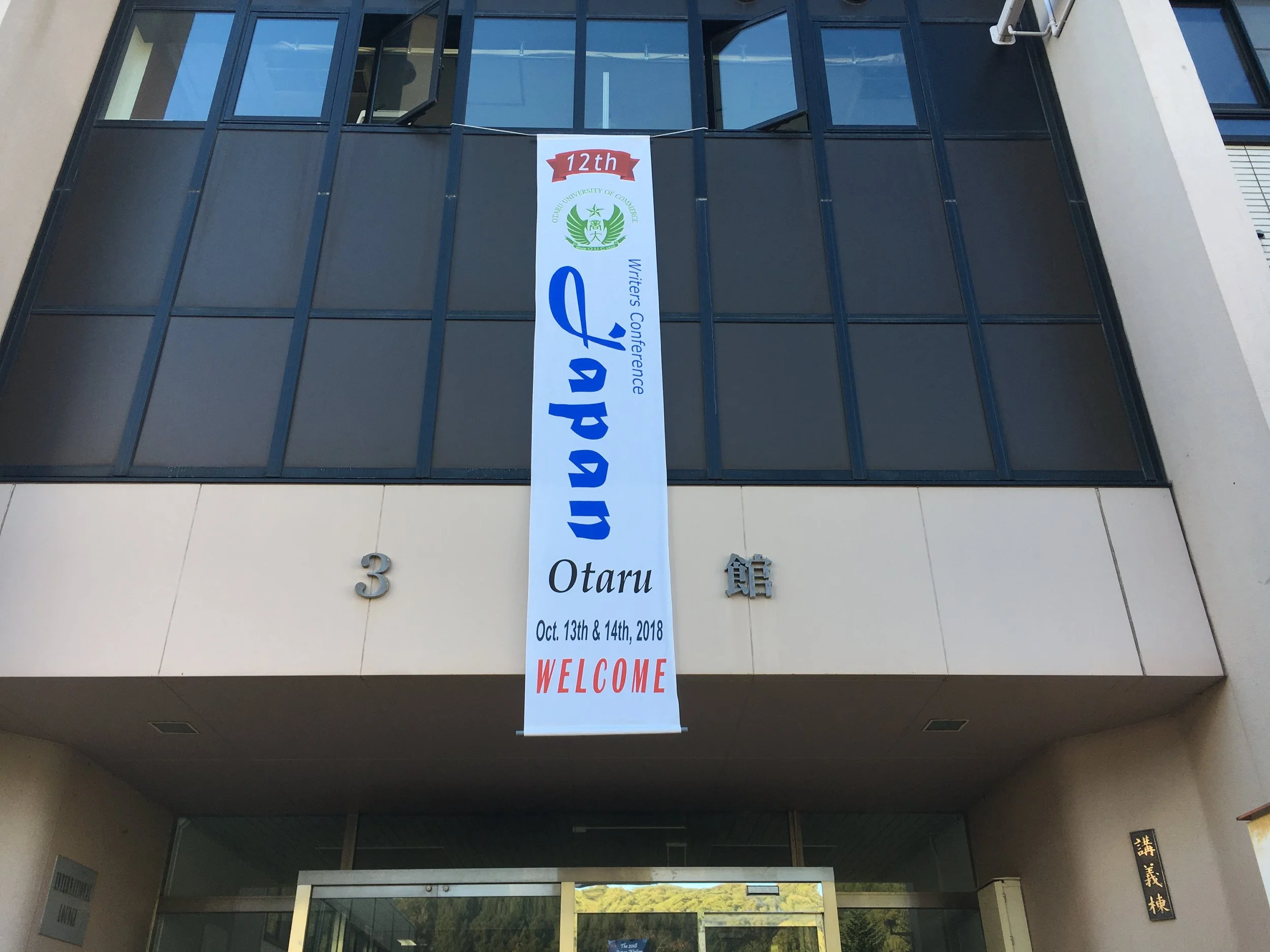
The Japan Writers Conference inspired me to sign up for National Novel Writing Month (NaNoWriMo).  The NaNoWriMo challenge is to write 50,000 words of a novel in 30 days, starting November 1.  I actually started the novel a little bit early on October 19 and had 20,000 words by the end of the month, which is fine, because another 50,000 words will not complete it.  The working title is Vision More Glorious, and it’s about a psychiatric patient who is given an experimental medication.  As I wrote in the synopsis of the novel for NaNoWriMo, “When life gleams all too transcendent—outstripping even your most vivid imagination—how could things possibly end well?”

The writing these last two weeks has been challenging, but a lot of fun at the same time.  It is my first “new story” writing since I started work on the big edit of Under Shōko’s Bed back in August.  It feels good to be writing again, not just editing.  I am trying, though, to edit each day as well, so I am also working on Neyuki.  Add all of that to a full-time job and it has me wishing that days were a few hours longer.  How about a nice, round number like thirty?

Read More
Writing community M. Harmon Wilkinson Writing community M. Harmon Wilkinson

Japan Writers Conference 2018

The conference was intimate enough to make new friends and broad enough to learn new things. I came away inspired to be a better writer.

Last weekend, I attended the 2018 Japan Writers Conference in Otaru, a beautiful town in Hokkaidō on the Sea of Japan.  My thanks go out to John Gribble and Karen McGee, the conference coordinators, and Shawn Clankie, our host at Otaru University of Commerce.

It was not a large conference.  There were about forty sessions on three tracks.  So it was big enough to get an interesting mix of topics, but intimate enough to see the same faces repeatedly, so that soon they were no longer strangers.  I got to see Jacinta Plucinski and Chris Akiba Wang from Hackerfarm, reconnect with an old friend, Gregory Dunne, and make new friends like Warren Decker, David Gregory, Min Ku, Kai Raine, and Eric Selland.  I met and talked with so many interesting people, and all were passionate like me, trying to become better writers, welcoming dialogue and feedback.

The sessions were excellent, but the one that may have the most lasting effect was Charles Kowalski’s on creating suspense.  It so inspired me that I am now increasing the suspense, ratcheting up the tension, in my second novel, Neyuki.  I think that is what the novel has been missing.

I look forward to having something published by the time the 2019 Japan Writers Conference rolls around.  Perhaps I can make a presentation about the whole experience.

Read More