Month/Year
- April 2026
- April 2024
- June 2023
- April 2023
- April 2022
- March 2022
- November 2021
- July 2021
- May 2021
- April 2021
- December 2020
- November 2020
- October 2020
- September 2020
- August 2020
- June 2020
- May 2020
- April 2020
- March 2020
- January 2020
- December 2019
- November 2019
- October 2019
- September 2019
- August 2019
- July 2019
- June 2019
- May 2019
- April 2019
- February 2019
- January 2019
- November 2018
- October 2018
- September 2018
- August 2018
- July 2018
- June 2018
- May 2018
- April 2018
Tag
- A Scowl Becomes Me
- Abuse
- Agent search
- Audio book
- August
- Authenticity
- AutoCrit
- Balance
- Blog
- Blurb
- Book design
- Books
- Books on writing
- Brandon Sanderson
- Character names
- Cover art
- Cultural appropriation
- Depression
- Dialogue
- Editing
- Emotion
- Expenses
- Fans
- Haruki Murakami
- ISBN
- InDesign
- Japan Writers Conference
- Japanese content
- Kintsugi
- Language
- Life in America
- Life in Japan
- Mental health
- Murder
- Muse
- NaNoWriMo
- National Novel Writing Month
- Neyuki
- Orpheus Insufficient
- Orson Scott Card
- Pandemic
- Pantsing
- ProWritingAid
- Publishing
- Punctuation
- Routine
- Scrivener
- Self-publishing
- Sequel
- Sexual abuse
Website: 8th anniversary
I turned sixty-nine today. The website turned eight. The last two years have been much more eventful for me than for the website, and even more so for this blog, which has continued to survive my benign neglect.
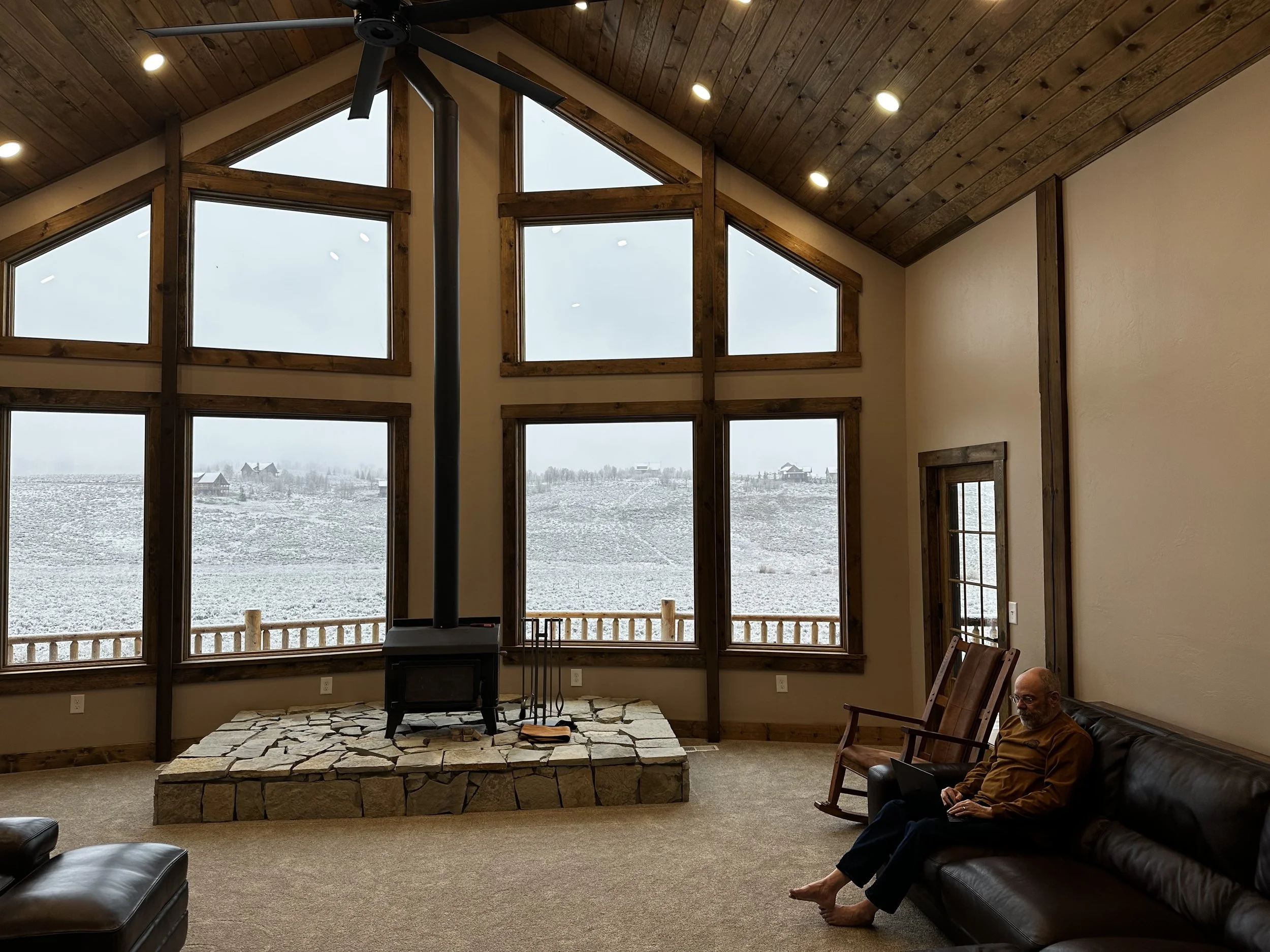
I continued writing over these two years. Six months ago, my son-in-law completed building a cabin in Scofield, Utah. I get to write there occasionally. It’s marvelous. Unfortunately, I have not written enough to complete either of the novels I started. The first, Orpheus Insufficient, is grounded science fiction, the story of a three-year-long voyage to Titan, one of Saturn’s moons, in the years 2204 to 2207. Unfortunately, Orpheus, still unfinished, is over 130,000 words. So I am thinking I might rewrite it to add 80,000 or so more words and turn it into a trilogy rich in subplots.
The second novel is US 89. I started writing it for a contest, but needed to do more research than there was time for. It tells the story of a newspaper columnist in 2076 who is writing a piece a week about each of America’s fifty-two states. She ends up in Arizona, and it is suggested to her that she drive up US Highway 89, which goes from Arizona all the way to Canada. I wrote the Arizona chapters with little trouble, but everything past Utah stopped me in my tracks. The needed research may require me to actually drive the length of US 89. You would think that, being retired, that would be a simple thing for me, but my wife and I are surprisingly busy.
I have also been editing and rewriting scenes in The Time Well, the first in my time travel saga which could end up being eight to ten books. I have to rewrite because the science just wasn’t grounded enough. If we’re talking time travel, of course, it can’t be completely realistic. But my premise was too far out there. There’s going to be hand waving involved, but I wanted to stretch credulity only enough that suspension of disbelief would still come easily.
I continue to work on the sixth Time Well book, which has bloated to 399,000 words. It needs to be edited down and will still require three volumes. I am wondering how to make them work as stand-alone books, but it may just be impossible.
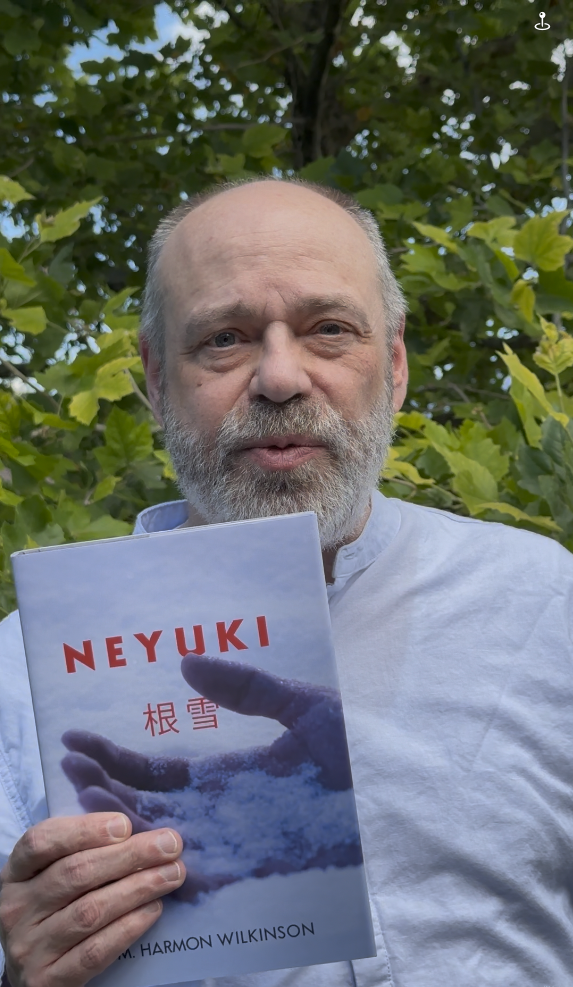
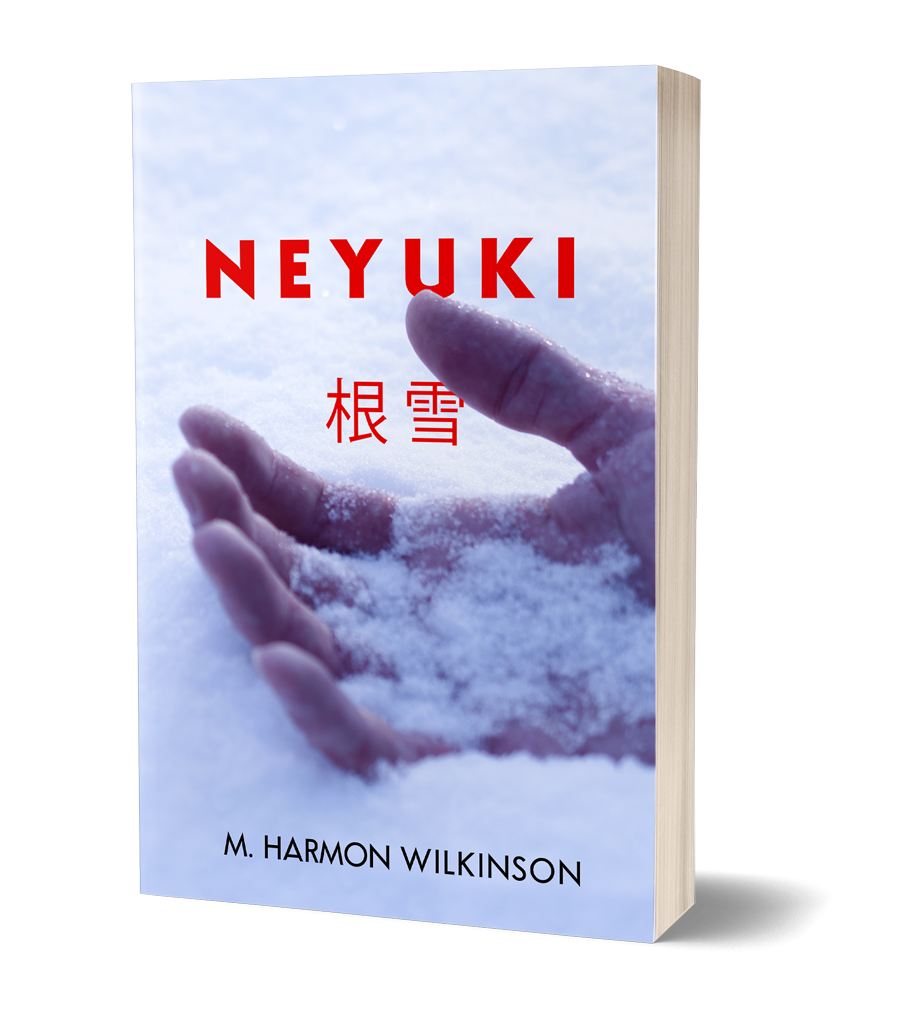
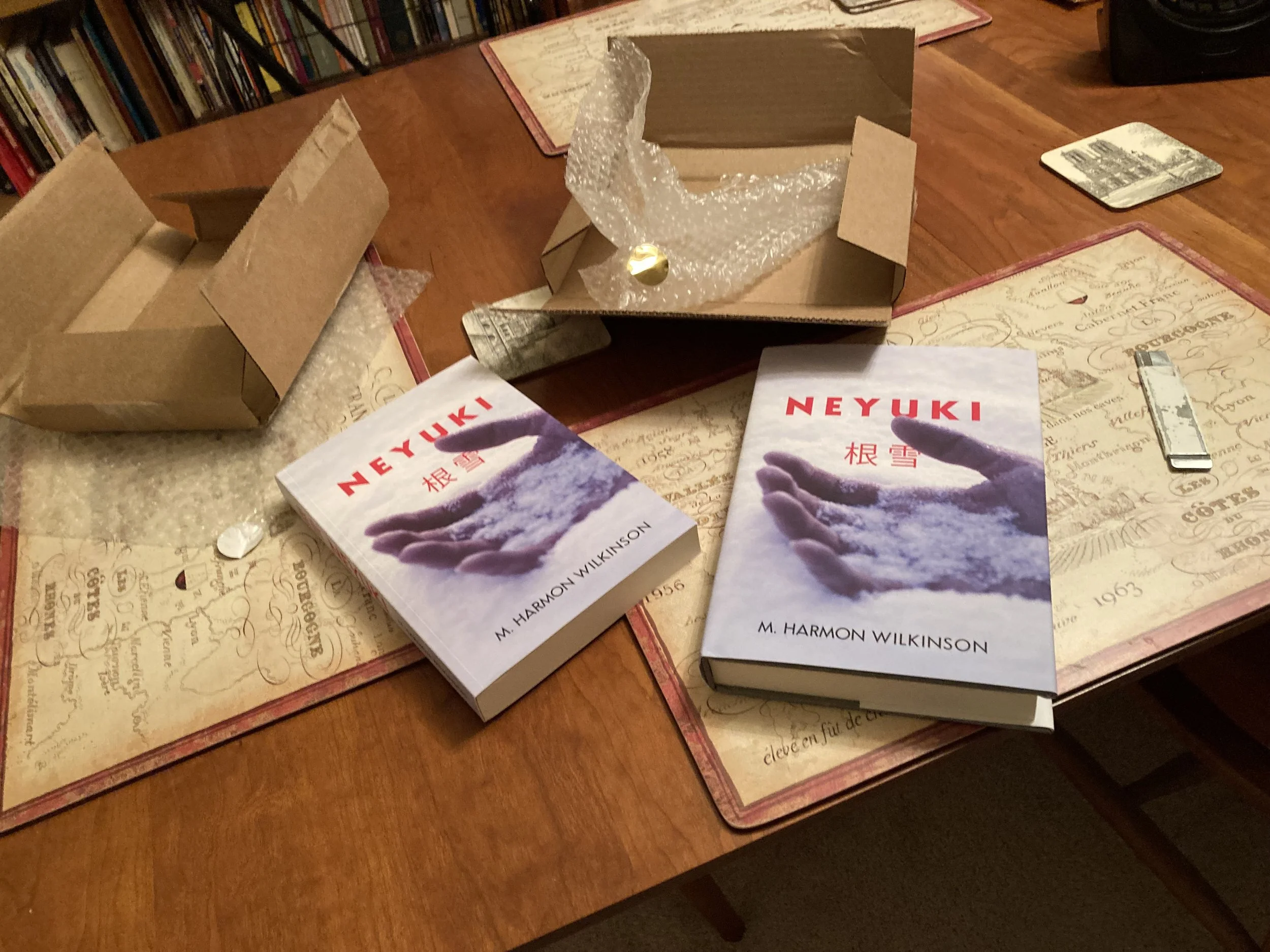
My second novel, Neyuki, is getting closer to being publishable. I have a cover artist, and a friend is typesetting it for me. I think that will all be done by the end of the month. It has taken me far too long to get this out. I kept thinking maybe I would go with a traditional publishing house. In the end, though, I have decided to self-publish. Marketing will be the hard part, and prepping the novel’s debut will take long enough that it won’t show up before July or August.
I have gotten much more involved with the local writing scene, working with two chapters of the League of Utah Writers. I have also joined Apex Writers, a writing community with international scope. Finally, I am still on the committee that puts on one of Utah’s largest writing symposia, Life, the Universe, and Everything, each year in February..
Website: 4th anniversary
It’s this website’s fourth anniversary. In the last year I published my first novel, Under Shōko’s Bed. I also wrote four new ones. With all that productivity, while I lost my way with this blog, I did not give up on it.
It’s this website’s fourth anniversary. That makes me look both back and forward. In the last year I published my first novel, Under Shōko’s Bed. I also wrote four new ones, turning The Time Well into a series. With all that productivity, though, I lost my way with this blog. But that inattention didn’t mean I gave up on it.
Now that the first novel is published, I am working on getting the second, Neyuki, ready to go. I am considering doing the book design myself. I need to become more facile with Adobe InDesign, and working through a novel will be a great way to do that. The path ahead is clear for Neyuki, but I wonder what will follow. I am thinking of writing one or two sequels to my third novel, The Man Terror Club, so that one probably won’t be next in line for publication. I may skip ahead to novel five, Vision More Glorious. I doubt, though, that I can prep two novels for publication in the next year. No matter what I opt for, it’s going to be busy.
One thing that will make this time bittersweet is that, unless something unexpected arises, this will be my last year in Japan. I suspect once I’m gone, my novels won’t end up with as much Japanese content, but that remains to be seen. I still have so many ideas for things I want to write.
Website: 3rd anniversary
My third year on the website, I only made seventeen blog posts, but I wrote a lot.
I have written fewer blog posts this third year, only seventeen. But I have been writing. I wrote a new novel, my eighth, and got Under Shōko’s Bed ready for publication. With that, editing the other novels, and a full-time job, I have been plenty busy. But it’s difficult to stay current on the blog when I have no readers. I trust there will be readers eventually, though, so I will keep at it.
I hope that the next twelve months will see publication not only of Under Shōko’s Bed but also Neyuki, plus significant progress toward publication of The Man Terror Club.
The idea: The Man Terror Club
Perhaps the most surprising experience of writing The Man Terror Club was how much I came to like the characters. While all the women have been betrayed, abused, or discarded, they remained kind, giving, and caring. Their love for each other heals them, and that healing is most of the story, not their terrorism as they lash out at the evil men do.
The idea for The Man Terror Club came to me as I was waking up one morning ten years ago. Who knows what odd places thoughts steal in from when you’re only half awake, but I wondered how an elevator operator might fight back if she was being sexually harassed. As my somnolent imagination meandered, it strayed toward acts of physical resistance and retribution, and the title The Man Terror Club popped into my head.
It may be the most evocative of all the titles I’ve written, but I worried about creating the story. That title deserved a brilliant book, and I wasn’t yet confident enough in my first two novels to believe they had prepared me to produce something of that caliber. I experimented with the idea in 2010-2012 as a short story, but I didn’t feel ready to write even that much.
So I waited.
I got more serious about writing in 2017. I rewrote Under Shōko’s Bed and Neyuki and improved both novels. How much more experience would I need before I could do justice to my idea? I thought it best to write at least two more novels before I tried The Man Terror Club. The problem was I didn’t have two other stories that moved me as The Man Terror Club did, so I finally resolved to just do it. In the spring of that year, over two months, I produced the first draft. I did not have the entire plot firmly in mind from the beginning, although I knew things would take a dark turn and end in murder. I envisioned each of the pre-murder chapters as a short story focused on a different member of the club. As I wrote, though, the women’s stories blended together and lost their short story flavor.
Still, each chapter for the first three-quarters of the novel is told first person from a different character’s point of view. (After that, narration stays first person, but already-introduced characters narrate sections of the chapters.) I didn’t realize at the time that I was flying in the face of writing pundits who warn neophytes and even more advanced writers never to write first person with a large cast of narrators. You should have few narrators and preferably only one. But what I attempted, eleven narrators, is not unheard of. William Faulkner used fifteen first-person narrators in As I Lay Dying. Of course, he won the Nobel Prize in Literature, while I remain unpublished. Nevertheless, I wanted to try.
Perhaps the most surprising experience of writing The Man Terror Club was how much I came to like the characters. While all the women have been betrayed, abused, or discarded, they remained kind, giving, and caring. Their love for each other heals them, and that healing is most of the story, not their terrorism as they lash out at the evil men do.
With my ongoing interest in the characters, I have even been bouncing the idea of a sequel around. I am taking notes and considering key characters, plot twists, and terrorist acts. I worry it may be premature to start a sequel before the first novel is even published. But The Man Terror Club, while not finalized, is just about ready for professional editing. I don’t think the fundamental story will change. And I want to spend a few months living with those women again. They are lovely people (who do extreme things), and more of their story ought to be told.
A hermit's life
COVID-19 has rendered me a hermit. But the editor, cover artist, book designer, and proofreader I need are likely hermits too. Hermits unite!
I don’t have COVID-19 yet. Neither does anyone in my immediate family. Some are saying the U.S. will see a vaccine by Thanksgiving. That seems almost hopelessly optimistic. I’m not sure how Japan is doing on vaccines. My classes are all online, and the university has decided that will go on for the rest of the year. I am a hermit. It’s time to connect with some other hermits. It’s time to finish something.
I finished my first novel, Under Shōko’s Bed, months ago. For a long time, I was vacillating over whether to look for an agent and a publisher (as my editor suggested), or self-publish, as I had originally decided. A couple of things have made me shy away from the traditional publishing route. The first was the reaction I got to my first round of agent queries: silence. The second was my editor’s feedback on my second novel, Neyuki. It includes violence and sexual exploitation, and my editor doubted that in today’s climate, any American publisher would pick it up. It is also a book set in Japan, written by a foreigner (even though I’ve lived here for over twenty years, and if you should write what you know, Japan is what I know). I suspect interest in such books is narrow. A publisher is unlikely to want to squeeze into such a niche market. It’s also possible that even if someone took the book on, they would expect me to create buzz for it. If I will be creating the buzz anyway, I might as well just self-publish.
I want the book to be professional, though. I have worked with an experienced editor, but I still feel the need to hire a final copy editor—who is probably shut in somewhere because of this virus, a hermit like me. That will be expensive. Then there is the cost of hiring a cover designer, another likely hermit. This being my first novel, I would also prefer to work with someone on the book design, possibly a third hermit. Then I’ll need a fourth, a proofreader. None of these hermits will have taken vows of poverty, so all of this will push the cost high enough that I will almost surely lose money on the book.
It will be a great book, though.
So this month I plan to find a copy editor. Once the text is set, I will find someone to do a cover for it and possibly have the same person either do the interior or give me an InDesign template so I can do it myself. I want to get the book out in the fall. It will be a major challenge, as my other six novels are calling to me. There’s a lot to do. But when someone asks me how I spent my COVID isolation time, I will have a personal accomplishment to crow about.
Editing: Neyuki II
I’m trying to write a whole new opening chapter. But bucolic life in rural Japan does not capture the imagination and refuse to let go. It doesn’t turn pages.
My editor, Fran Lebowitz, got the manuscript of Neyuki back to me a few weeks ago. It was a long time coming, but she gave me great feedback, including her overarching reaction: “I really loved the book.” I can satisfy most of her comments with simple revisions, but there are a couple of things that are more challenging to fix.
Fran would like to see the characters before the catastrophe that makes their lives spiral out of control. I had originally started with the momentous event, thinking that would be an effective hook. Based on her comment, I’m trying to write a whole new opening chapter. I am woefully dissatisfied, though, with the new beginning. Bucolic life in rural Japan does not capture the imagination and refuse to let go. It doesn’t turn pages. So day after day I peck away at ideas that may show the protagonist’s pleasant life in a way that can also hint at the coming conflict and keep readers going.
The longer term challenge for the novel is that it deals with sexual deviance and violence. Those are not the story’s principal themes, and the book condemns the characters who do those things, but they are integral to the plot. I know I risk triggering terrible thoughts, emotions, and memories for some, particularly survivors of sexual abuse. Some will say we should avoid such topics, that whatever worth the writing may have, it’s not important enough to overcome its degrading nature. Some worry about copycats. Those fears are not lost on me. But I know such deviance exists, I feel it’s good to denounce it, and I think Neyuki is a story worth telling. Yet I suspect no North American publisher will touch it. I could try to find a publisher in another country (the UK, for example), or I could publish it myself. Over time, though, the topic may become even less tolerable and the novel might forever stain me in some readers’ eyes. Even so, I’d like to find readers who will be moved by the story.
Whatever I decide, I hope to have a revised version of the novel completed this summer. It would be wonderful to publish it before the winter snows hit Japan.
Website: 2nd anniversary
I now have seven complete novels in my bookshelf. I am far behind on publishing. And what will I write next?
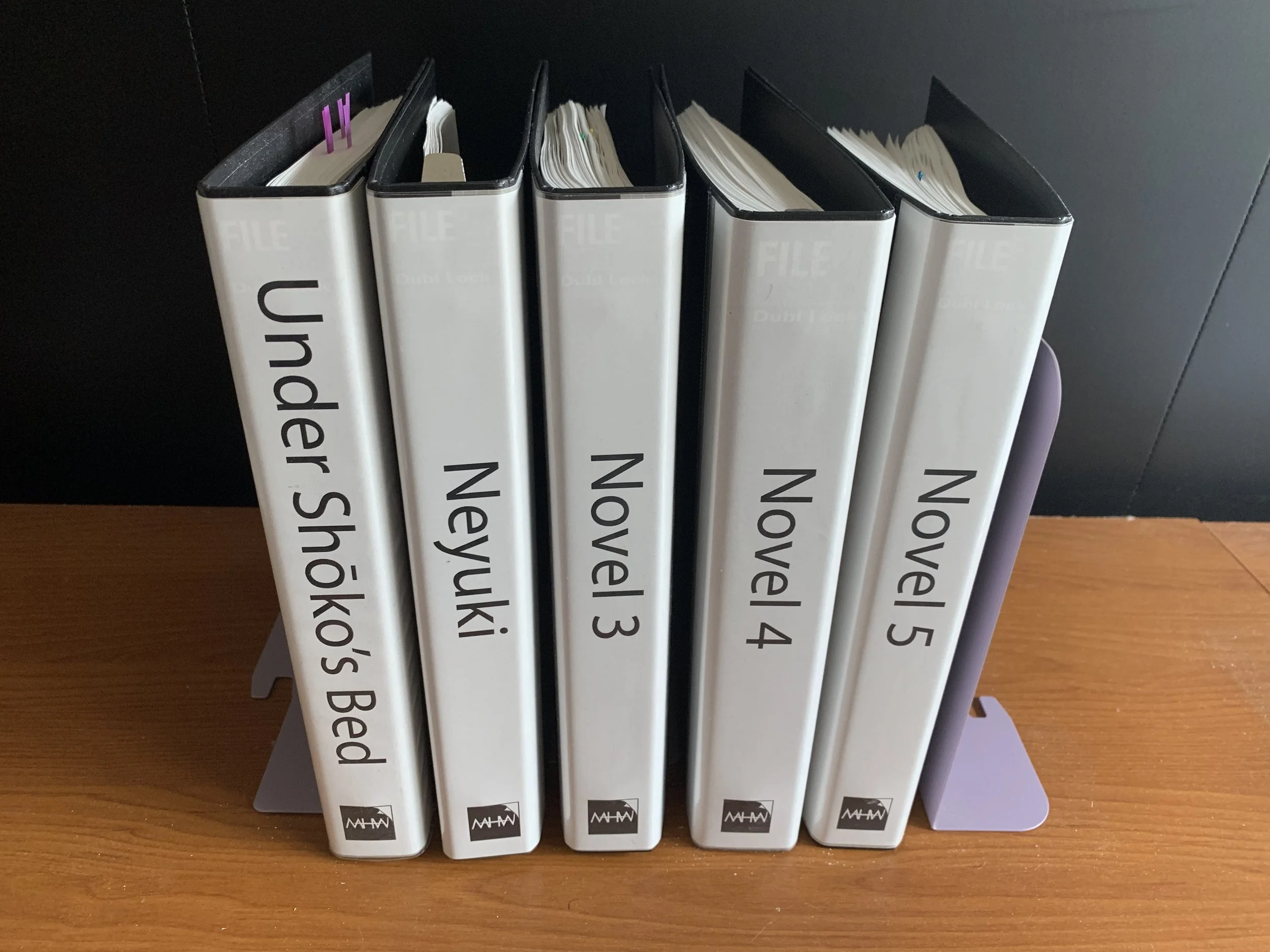
This month is the second anniversary of the website! I have written a lot during that time. I now have a row of seven complete novels in binders on my bookcase. I finished the seventh this week while hiding from the pandemic.
Neyuki is currently with my editor, but the edit should be done this month. I am so looking forward to her feedback.
The Man Terror Club, Kintsugi, Vision More Glorious, The Keeper, and The Time Well are waiting to be edited, although I plan to introduce them here on the website over the next few weeks. I may have to find more than one editor, as I am getting too far ahead. The Keeper and The Time Well are new in the last year, although they were both ideas I’d been sitting on for a while. I’m casting about for a new novel, and feel a little at sea. What if someone asks me what I’m working on? Having written two novels in the last year, and having spent considerable time editing six of them, I need some inspiration. I certainly hope I have flashes of insight and can produce more than one novel in the next year.
I also want to write some short stories this year. I have a couple on the back burner, one waiting to be finished and one waiting for the idea to fully form in my head.
Unfortunately, I am lagging far behind in my efforts to publish. I still have not given up on traditional publishing for Under Shōko’s Bed, but I’ve got to restart my agent search, which flagged while I wrote The Keeper and The Time Well. That part of being a writer is what I put off most easily. It’s hard.
Writing software: Two years with Scrivener
After writing with Scrivener for two years, I recommend it even more highly.
Are you wondering what to get for that writer on your holiday gift list? Get Scrivener from Literature and Latte. Your writer will thank you. Of course, it’s possible that they will find the software so useful that their writing hours will multiply and they will leave you with just scraps of their time as writing overwhelms another life. Software can be fraught with peril.
I last wrote about Scrivener in my 13 April 2018 blog post. I had been using it for two and a half months and was still learning how things worked. Now, nearly two years in, I know the software much better than I did back then, and I like it all the more. In 2018, everything I had in Scrivener I originally wrote in Apple’s Pages word processor. Now I have three complete novels written from scratch in Scrivener. It’s a great writing environment and a major boon to my creativity.
For me, Scrivener’s most useful feature is the “Binder” on the left side of the window. I think of it as an outline of the novel. I write each scene in Scrivener as a separate text file and the Binder organizes these hundreds of files into a simple hierarchical format. A title on each scene identifies it for me. The Binder lets me move things around and I often do. It also gives me the freedom to write non-linearly if that is how my muse is moving me that day. I can jump ahead and write things that come later. I can fill in the outline if I want to plot the novel in advance, or I can just add the scenes as they come if I am “pantsing” it. That freedom, together with easy organization, is a potent combination.
Another feature I love is the ability to assign Metadata to scenes. I add the date when each scene takes place and in some novels even the part of the day. It is wonderful for keeping track of the timeline and making sure everything works. I also add where the scene happens. I said in my blog post last April that I had even included the snow depth in each scene in my novel Neyuki, since it is important to the plot. I put in keywords that indicate the type of scene, symbolism, characters, etc. Then I can gather the scenes with a particular character or setting or scene type (e.g., dialogue scenes) so I can edit them for consistency. The flexibility is fantastic.
In my April 2018 post, after praising the software, I tempered my review with a significant drawback: “But—getting your work out of Scrivener can be a terrible pain.” I was referring to compiling the scenes into a manuscript, Epub, Mobi (Kindle), or other file format. There is a steep learning curve. It is not simple. But over time I solved my problems one by one and the formatting possibilities are powerful. So after working with the software for almost two years, I no longer feel that outputting from Scrivener is particularly painful.
But—I still do not trust Scrivener’s compiler to get the formatting perfect. For example, in a recent compile where I allowed hyphenation, Scrivener broke the word “wanting” after the “i,” so instead of “want-ing,” it gave me “wanti-ng.” I do not understand how such an error even makes it into a software program. Either someone at Literature and Latte messed up, or their lexicon includes a woeful error, or the user can customize hyphenation points (which would be a useful feature) and I accidentally did this. (I don’t think it was me, but if it was, there is no excuse for software being that easy to mess up.)
There are other little formatting problems. They are few and rarely pop up, but there are just enough that if I end up self-publishing, I will have to use layout software such as Adobe’s InDesign for the final formatting. I wish Scrivener had that capability and I could trust it and skip that final step, but that is a bridge too far.
So I recommend Scrivener as a gift to the writer in your life or yourself. Find a discount and buy it. Do it now. You will enjoy its organizing features, which I believe will unlock greater creativity in you. With a bit of learning, you’ll be able to output files in almost any format. And then, if you’re like me, when you’re done with all the writing and editing and you’re ready to publish, you’ll worry that the formatting isn’t perfect and you’ll take your output into something from Adobe.
Three more novels
I’ve been editing three more novels. I hope to introduce them here within the next few months.
My first two novels, Under Shōko’s Bed and Neyuki, had been around for a long while before I opened this website last year, so I introduced them immediately. Neither had been through a professional edit, but both were well formed and unlikely to change fundamentally. My editor had me fix Under Shōko’s Bed for length, pacing, and some overwritting, not the basic storyline. Neyuki is with her now, and I hope the outcome will be similar.
I have three more novels, though, that are not as well developed. Since early May, I’ve been editing them. I started on them sequentially, but at times I have edited all three simultaneously. I have patched up holes and filled out thin spots. Novel 3 needs one more bit of story to make it satisfying. Besides wracking my brain, I am wheedling family and friends for the spark of that final idea. Novel 4 still needs research/expert knowledge to finish a few scenes. I know an expert. It’s time to make contact. Novel 5, last year’s NaNoWriMo novel, needed a new ending, which it has now. Each novel has places where I’ve written “FIX” in all caps, to mark (along with underscores) spots that need attention or are missing words. But those places are disappearing.
Despite the three novels approaching the point of asking others to read them, I am not adding them yet as “coming attractions” to this website. Validating feedback must come first. Each one needs editing for characteristics like symbolism and foreshadowing that will raise its literary quality. I also need to pay more attention to their voices. Announcing them is an exciting prospect, though, and it’s coming much more quickly than I expected even a few months ago. I’ve made breakthrough progress on all three in the time I thought it would take for just one.
It is going quicker partly because working simultaneously on three novels is not the confusing, scatterbrained experience I expected it to be. The content is all in my head. The voices are not all there yet, but I’m getting closer with that too. It’s been a great confidence builder.
In fact, I’m feeling buoyant enough that I am eager to start something fresh. Ideas draw my mind in new directions every day now. If all goes well, I may even do NaNoWriMo again this year.
Approaching a major rewrite
I am rewriting my fourth novel, a major reworking that is unlike any editing I have done before. At first challenged, I am coming to love the process.
My first two novels, Under Shōko’s Bed and Neyuki, are waiting on editor feedback. This has left me free to either work on one of my other novels or jump into something fresh. I have been doing so much editing that I want to break out and start a new piece, but I also feel the weight of those other novels, so that remains my focus for now. There is good content in each of the three, but they need major reworking. I had been having a terrible time trying to lose myself in the work, and I finally realized it was because I had never done that sort of thing. I have done big work on the first two novels, but I never had to reform them completely.
For the first of the novels to reform, I chose a still untitled work that for now I simply call “Novel4.” I wrote it a year ago as I was waiting for my editor to get to Under Shōko’s Bed. In the time since then, two editors have been through Shōko, and the learning from those edits colors my reading of Novel4. So many things I did not recognize as problems a year ago now jump out at me. I have also grown through Tokyo Writers Workshop. There are so many viewpoints and what I learn each month from the group is all fresh in my mind, especially recognition of my weaknesses. Also, I am reading more. I have mentioned before that reading has never been easy for me. I find as I read now, though, I notice more what the writer is doing. I see writers taking chances and doing things differently than I would have expected. All this teaches me as well.
The big problem with Novel4 is that it needs to lose an entire character, even though she was the driver of major twists in the plot. Re-plotting the novel was being a chore, when writing is supposed to be fun. So I decided to stop pushing myself to have everything decided in advance. I love the wonder of the story coming to me as I go. Granted, it can be dangerous. You can write yourself into a corner—or do what I did and create a cringeworthy relationship between two characters that would make the reader abandon the novel. I am on more solid ground now, though, than I was a year ago. So I have an idea of where the novel is going, I have last year’s content as a framework, and I have my imagination as I write new relationships into the novel. It gets more interesting and exciting by the day! I just wish I had the time to work through it faster.